Digital Regulation in a Fast Changing World: A New Research Handbook
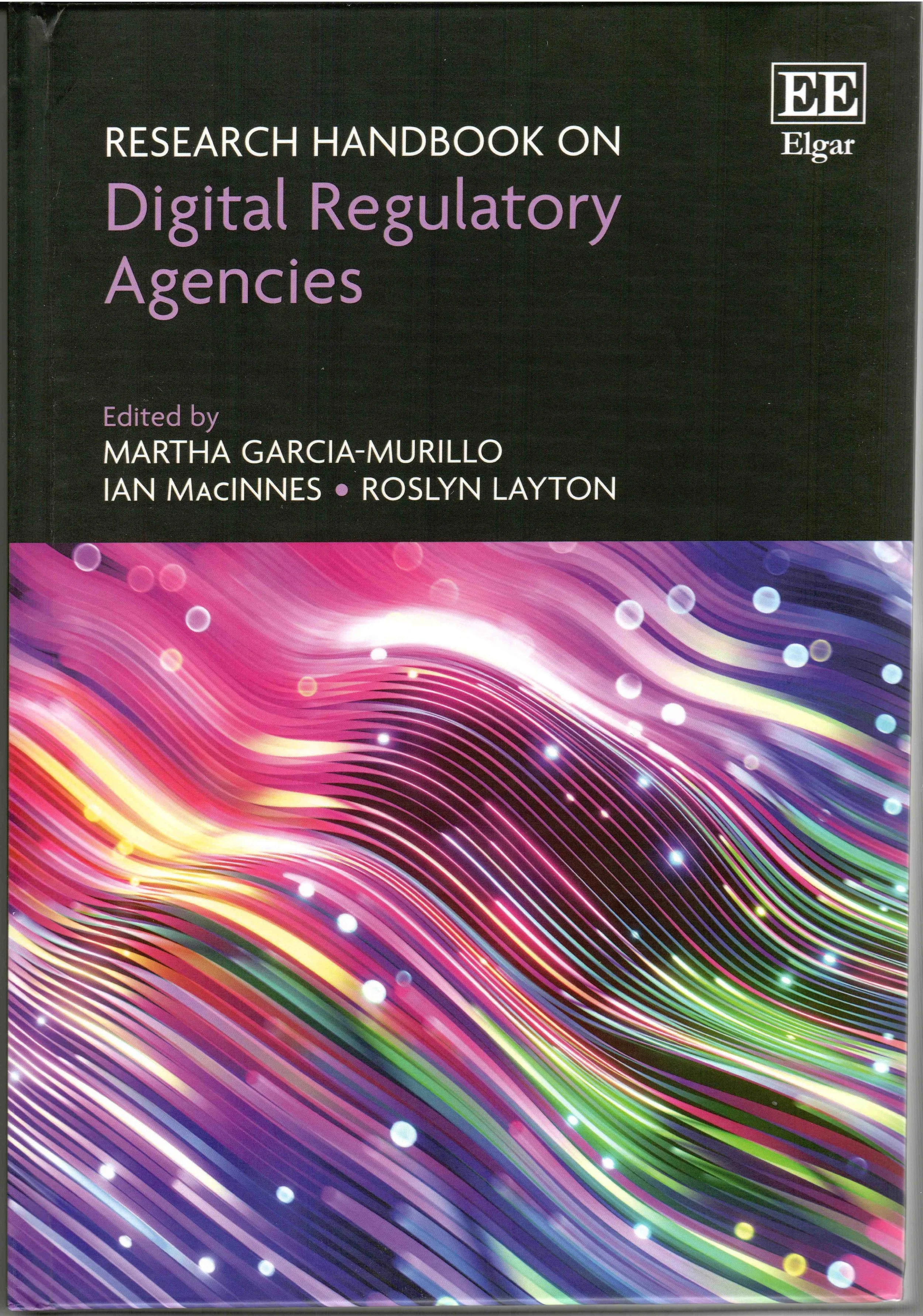
The pace of innovation in digital technology has far outstripped the ability of traditional regulatory institutions to cope. As platforms, AI systems, cloud infrastructure, and satellite networks reshape economies and societies, governments are struggling to keep up with the legal, economic, and social implications. A new Research Handbook on Digital Regulatory Agencies (Edward Elgar, 2026) edited by Martha Murillo, Ian MacInnes, and Roslyn Layton steps into this gap, offering a comprehensive, multidisciplinary look at how digital regulation can be designed, rethought, and coordinated in the decades ahead.
This handbook brings together a wide range of distinguished authors—academics, regulators, and policy experts—who examine the core questions surrounding digital regulatory agencies. They explore how institutions can adapt to the distinct traits of the digital economy, how to balance innovation with risk, and how to preserve competition, privacy, and democratic values in an increasingly interconnected world. The volume surveys responses to changing digital technologies, from broadband access and AI oversight to cybersecurity, cloud infrastructure, satellites, and healthdata governance.
The book is structured around four main themes. First, it asks what role digital regulators should play: when is a dedicated “digital regulator” needed, what functions should such an agency perform, and how can it reconcile economic and social goals in digital markets?
Second, it turns to specific digital domains—broadband cost recovery models, IP interconnection in South Korea, the role of internet exchange points (IXPs), AI use in Latin America, jurisdictional questions in space law, cybersecurity institutions in the EU and the US, and the European Health Data Space—using international case studies to illustrate common patterns and divergent approaches. Third, the handbook looks at country level experiences, including New Zealand, Japan, South Africa, and Peru, to show how different political and institutional contexts shape the design of digital regulation frameworks. Finally, it addresses international cooperation, examining how digital regulatory agencies can coordinate across borders, how US–China competition affects AI governance, and how forums such as the UN and the ITU can support digital regulation, spectrum coordination, and space communications policy.
The contributors, whom can be recognized at TPRC, emphasize the need for flexible, context sensitive, and cooperative governance structures. They argue that regulators must move beyond one-size-fits-all models and instead build institutions that can learn, adapt, and collaborate with other jurisdictions, civil society, and the private sector. Their analysis speaks directly to the challenge of governing technologies that are global in scope but embedded in national and regional legal and political orders.
For students, academics, and researchers in technology regulation, economics, politics, public administration, and sociology, the handbook provides a rich set of conceptual frameworks and empirical case studies. It is likewise a valuable resource for policymakers, regulators, and practitioners who are grappling with how to design and operate digital regulatory agencies in an era of rapid change.
Eli Noam (Columbia University) describes the book as a “masterful look at overcoming the gap” between innovation and regulation, praising its “coherent and forward looking perspective that will shape essential digital policy and regulatory institutions for decades.” Erik Bohlin (Ivey Business School at Western University) calls it a “welcome contribution” that offers a multifaceted account of the roles and responsibilities of regulators across diverse digital domains and geographic contexts.
If you are interested in digital regulation, platform governance, AI policy, broadband, cybersecurity, or international coordination, this Research Handbook offers a broad, yet grounded, map of the current landscape and the directions it might take in the years ahead.